
Supervised autonomy: guide the AI, don't fear it
There are two ways to build "the human approves the action." One comes from fear. We built the other.
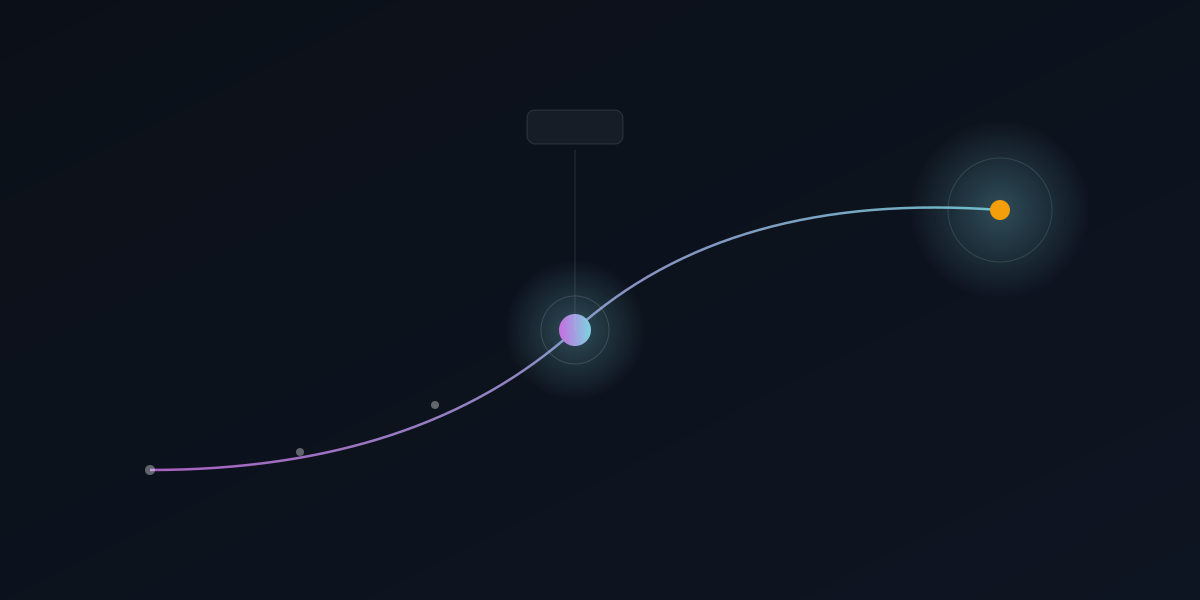
There are two ways to build a security platform where the human approves the action, and they feel nothing alike. One comes from fear: don't trust the AI, so make it ask permission. The other comes from confidence: the AI does the work, and you point it where to go. We build the second. We call it supervised autonomy.
The market has split into two unsatisfying camps. On one side, fully autonomous security AI that investigates and acts on its own — impressive, until it blocks the wrong thing at 3am and no one can explain why. On the other, dashboards that surface a score and leave every ounce of the work on the analyst. One is reckless. The other is passive. Neither respects both the machine and the person.
Supervised autonomy is the middle, and it is the confident one. The agent does the research, weighs the evidence, and brings you the next move — a concrete recommended action, with the reasoning attached and the button to run it. You give direction. It handles the rest.
The key word is guide, not gate. You are not granting a nervous machine permission; you are steering a capable one. The routine, reversible work you can hand off entirely. The moves that carry weight — a block, an isolation, a takedown — you keep. Not because the AI can't be trusted, but because that is exactly where a human's judgment, context, and accountability are worth the most.
And it grows. As you and the agent find your rhythm, you delegate more — because you want to, because it keeps being right, not because you finally dare to. Autonomy goes up over time, and the analyst's job moves up with it: less toil, more direction.
Underneath, the same commitment holds as everywhere else in the platform. Every recommendation carries the evidence behind it. Every action is logged and reversible. Every decision stays yours, and provable. Guidance without transparency is just a different black box, and we won't ship that.
We trust AI to do the work. We guide it — we don't fear it. And the wheel stays in your hands.
- The agent does the work and brings you the next move; you give direction.
- Hand off the routine, keep the consequential calls — with the evidence in front of you.
- Delegate more as trust builds. Autonomy grows, and it's always yours to steer.